

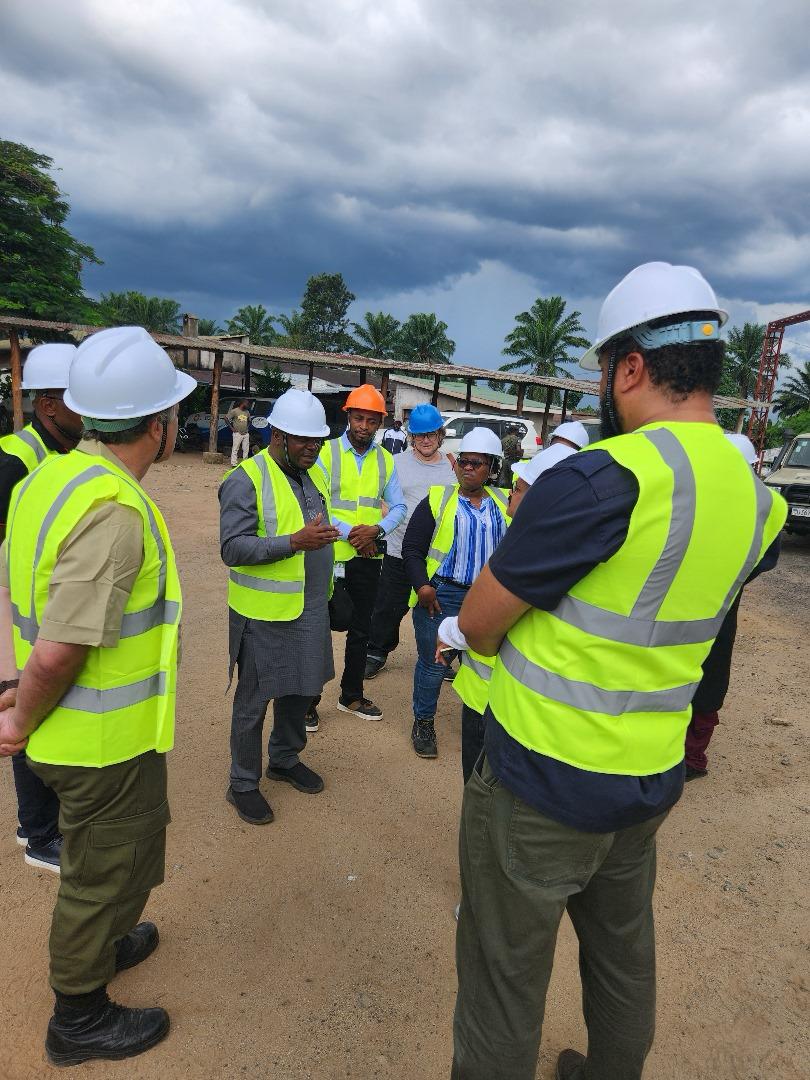
In a strategic mission to Beni, North Kivu, the African Agricultural Leadership Institute (AALI), under the leadership of President Dr. Nteranya Sanginga, convened with key partners to take concrete steps toward the materialization of the “Green Corridor, Kivu-Kinshasa” initiative. This collaborative effort reflects AALI’s enduring commitment to sustainable development, inclusive growth, and the transformation of agricultural and economic systems in the Democratic Republic of Congo (DRC).
Welcomed by Mr. Emmanuel de Mérode, Director of the Virunga Foundation, the delegation advanced discussions on establishing a public-private partnership (PPP) to support the Green Corridor. This partnership aims to enhance agricultural value chains, strengthen local processing capacities, and launch a sustainable development cluster powered by green energy solutions.
The Green Corridor—envisioned as a transformative socio-economic and environmental framework—was originally launched by the Congolese Government in collaboration with key stakeholders to integrate conservation and sustainable development across millions of hectares of vital ecosystems. It connects forest conservation, agriculture, renewable energy, and community empowerment to build resilient livelihoods and stimulate broad-based economic opportunity.
At Beni, the mission was the affirmation that inclusive collaboration among stakeholders is essential for materializing the Corridor’s potential. By engaging government entities, research institutions, civil society, and private sector partners, AALI and its collaborators seek to establish a shared foundation for investments and initiatives that catalyze local value-chain growth and community development.
The group discussed ways to promote value addition in agricultural sectors, particularly through enhanced processing infrastructure, market connectivity, and green energy integration. These efforts are aligned with the government’s vision of linking the eastern regions with economic hubs across the DRC, fostering competitiveness, and scaling up sustainable production systems.
Importantly, this mission underscored the role of inclusive partnerships that place communities, especially youth and women, at the center of development outcomes. By fostering shared ownership and coordinated action, AALI continues to champion models that transform local aspirations into practical opportunities, empowering rural producers and strengthening food systems for tomorrow.