

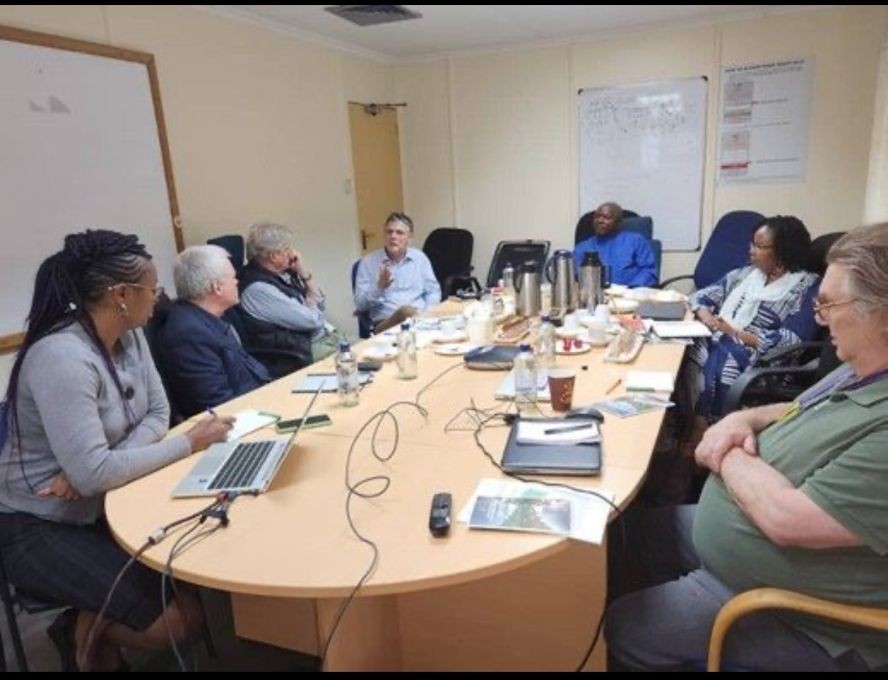
On March 12, 2025, the African Agricultural Leadership Institute (AALI)—led by President Dr. Nteranya Sanginga—joined key partners at the ICRAF campus in Nairobi to advance strategic planning for the Kivu-Kinshasa Green Corridor, a visionary initiative announced by H.E. Felix A. Tshisekedi, President of the Democratic Republic of the Congo, at the World Economic Forum in Davos earlier that year.
The meeting brought together experts from the Virunga Foundation, the International Institute of Tropical Agriculture (IITA), and CIFOR-ICRAF, reaffirming a shared commitment to a project that transcends conventional agricultural development. Designed to integrate conservation, sustainable agriculture, green energy, and economic development, the Green Corridor aims to transform landscapes and communities across the Democratic Republic of Congo (DRC).
At its core, the Green Corridor represents more than infrastructure—it embodies a pan-African vision for inclusive prosperity, leveraging the DRC’s abundant natural and human capital for sustainable transformation. By linking environmental stewardship with value-chain development, the initiative is poised to support over 31.5 million people through enhanced food security, climate resilience, and expanded economic opportunities.
Participants in Nairobi emphasized the pivotal role of local communities and youth in shaping and implementing the Green Corridor’s objectives. Their perspectives underscored that sustainable development must be rooted in local leadership, technical capacity, and equitable access to opportunity—principles that lie at the heart of AALI’s mission.
The discussions also highlighted the importance of collaborative partnerships across stakeholders—government institutions, research bodies, conservation actors, and farmers—to ensure the Green Corridor delivers long-term impact on ecological systems and rural livelihoods alike.
Anchored in a model that harmonizes conservation with commercial viability, the Green Corridor is poised to elevate the DRC as a key continental leader in sustainable food systems, biodiversity protection, and green economic growth. Such leadership aligns with the broader African Agenda for agricultural transformation and reflects the Institute’s commitment to supporting solutions that are inclusive, innovative, and future-oriented.
As planning shifts toward implementation, AALI and its partners are positioning the Green Corridor to become a catalyst for systemic change—where environmental protection, equitable development, and agricultural transformation intersect for the benefit of the Congolese community.