


In Kinshasa on 20 February 2026, Professor David Bugeme, Director of Programs at the African Agriculture Leadership Institute (AALI), called on smallholder farmers and stakeholders to adopt Black Soldier Fly (BSF) technology as an innovative and sustainable solution to the high cost of animal feed in the Democratic Republic of Congo (DRC).
Speaking on Radio Okapi, Prof. Bugeme emphasized that the BSF technology enables communities to convert organic waste into high‑value inputs that can strengthen entire agricultural value chains. The larvae of the Black Soldier Fly have a high protein content and can serve as nutritious animal feed for poultry, pigs, and fish, while the residue left after larval digestion provides rich organic fertilizer for crop production.
This approach aligns with AALI’s core mission to promote science‑driven, locally relevant solutions that enhance productivity, reduce dependency on imported inputs, and create new economic opportunities for farmers across Africa. By valorizing organic waste through BSF farming, rural communities can simultaneously address feed insecurity, waste management challenges, and environmental sustainability, advancing integrated models of agribusiness and circular economy.
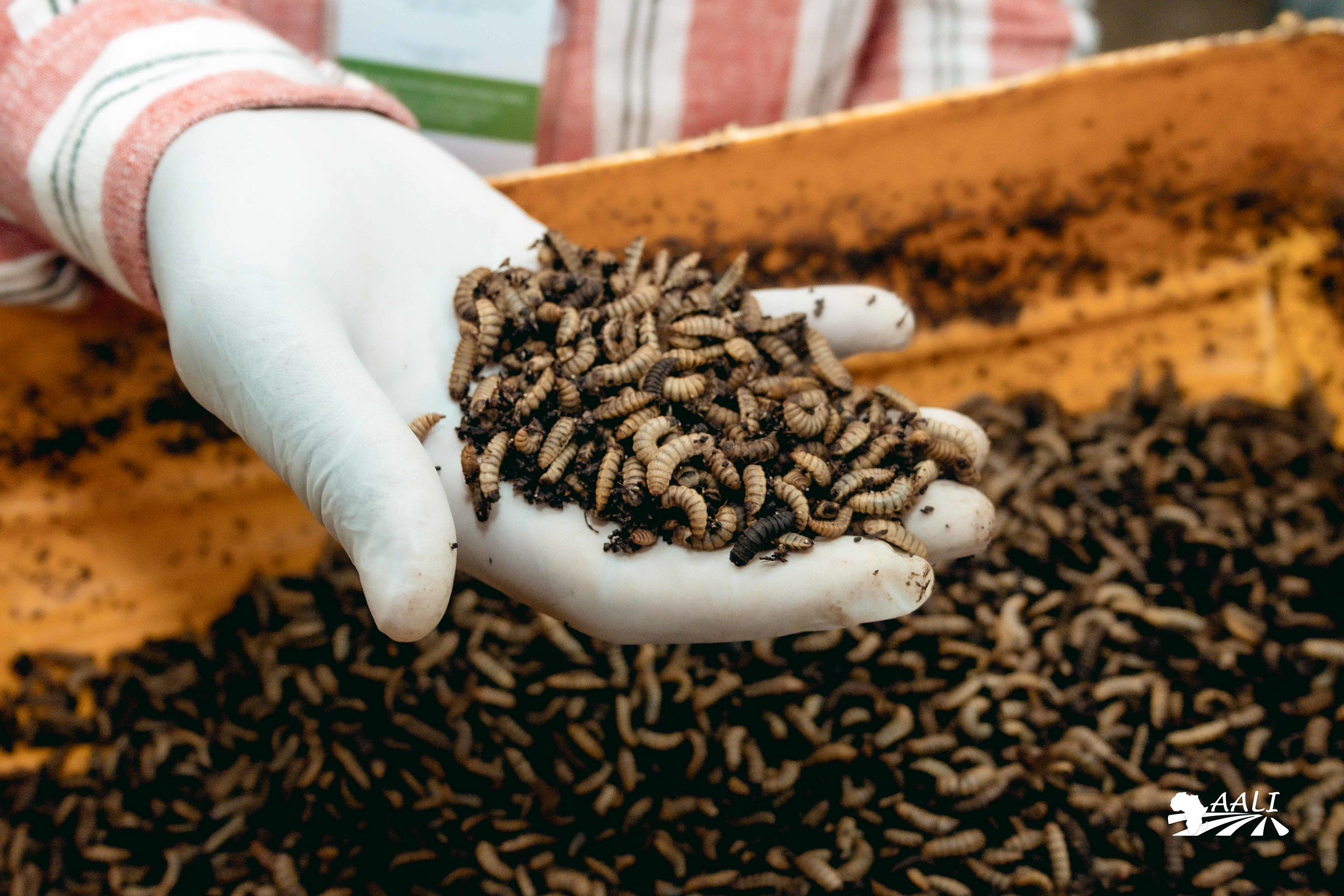
Prof. Bugeme highlighted the economic and ecological potential of this emerging sector, noting that BSF technology represents a pathway toward agricultural resilience in the DRC. He was joined in the discussion by Joella Buhendwa, General Director of Asti Ferme, who underscored the practical benefits and scalability of BSF farming for agripreneurs and livestock producers.
The promotion of BSF larvae as a protein-rich, cost-effective feed source reflects broader efforts across Sub-Saharan Africa to innovate in the face of evolving food system pressures. Research shows that insect‑based feeds can significantly reduce animal feed costs while enhancing livestock growth performance, and their adoption contributes to sustainable livestock and aquaculture systems.
The BSF technology is promoted by the AALI in Eastern DRC through the International Institute of Tropical Agriculture’s Black Soldier Fly for Bio-Circular Economy and Environmental Sustainability (IITA BBEST) project, funded by the Norwegian Agency for Development Cooperation (NORAD).