

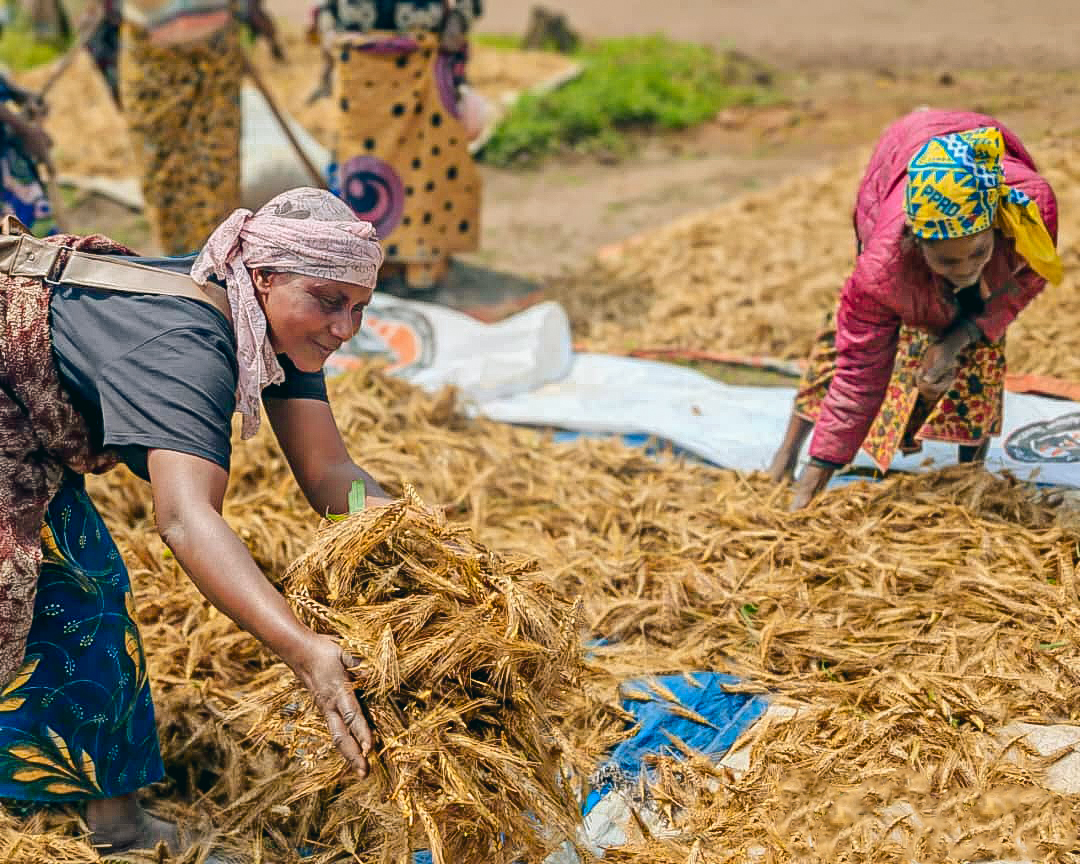
The African Agricultural Leadership Institute (AALI), in consortium with the International Institute of Tropical Agriculture (IITA) and the Virunga Foundation, officially launched wheat harvest and post-harvest activities on 21 January 2026 in Lubero Centre. This initiative marks a major step in modernizing the wheat value chain in North Kivu, directly benefiting local smallholder farmers.
At the heart of this intervention is the introduction of small-scale mechanization, including a wheat thresher adapted to family farms. This innovation reduces post-harvest losses, improves grain quality, facilitates processing, and eases the physical burden of agricultural work. During field activities, the AALI Youth Brigade provided close technical support, guiding farmers on proper harvesting techniques, handling and storage, and quality standards to ensure marketable wheat and improved household income.
Despite the region’s insecurity, the pilot initiative has already reached 350 producers, including 60% women, across five villages surrounding the demonstration fields. Through this hands-on engagement, farmers gained practical skills and confidence in adopting integrated soil fertility management (GIFS), combining wheat cultivation with maize and soybean to strengthen farm resilience.
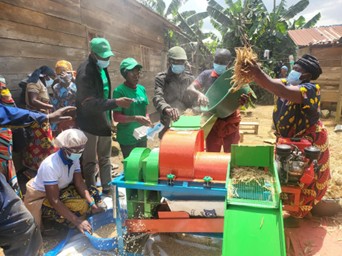
The Lubero pilot demonstrates that local wheat production is possible and profitable. Farmers noted the immediate impact of the thresher on reducing losses and enhancing the competitiveness of their crops. The initiative also positions youth and women at the center of agricultural innovation, with five young AALI brigade members deployed to provide technical support and mentoring.
Wheat is one of the most consumed cereals in sub-Saharan Africa, yet the Democratic Republic of Congo imports over 90% of its consumption, highlighting both a food security challenge and an economic opportunity. Lubero’s highland areas are agroecologically favorable for wheat, making the local value chain a critical component of the Kivu-Kinshasa Green Corridor vision, which links sustainable agriculture, food security, and rural development.
This pilot was made possible through collaboration with multiple partners: AALI, IITA, Virunga Foundation, INERA, the North Kivu Provincial Directorate of Agriculture and Livestock (DPAE), local agricultural services, and producer federations. Their joint efforts show that technical innovation, youth leadership, and community engagement can create resilient agricultural systems even in challenging contexts.
Looking forward, scaling this model across North Kivu and other suitable highland areas along the Green Corridor could strengthen local food security, structure the wheat value chain, and generate new economic opportunities for rural communities and youth. The 2026 wheat campaign in Lubero opens under the banner of innovation, partnership, and hope, with small-scale mechanization and youth-led action at its core.