

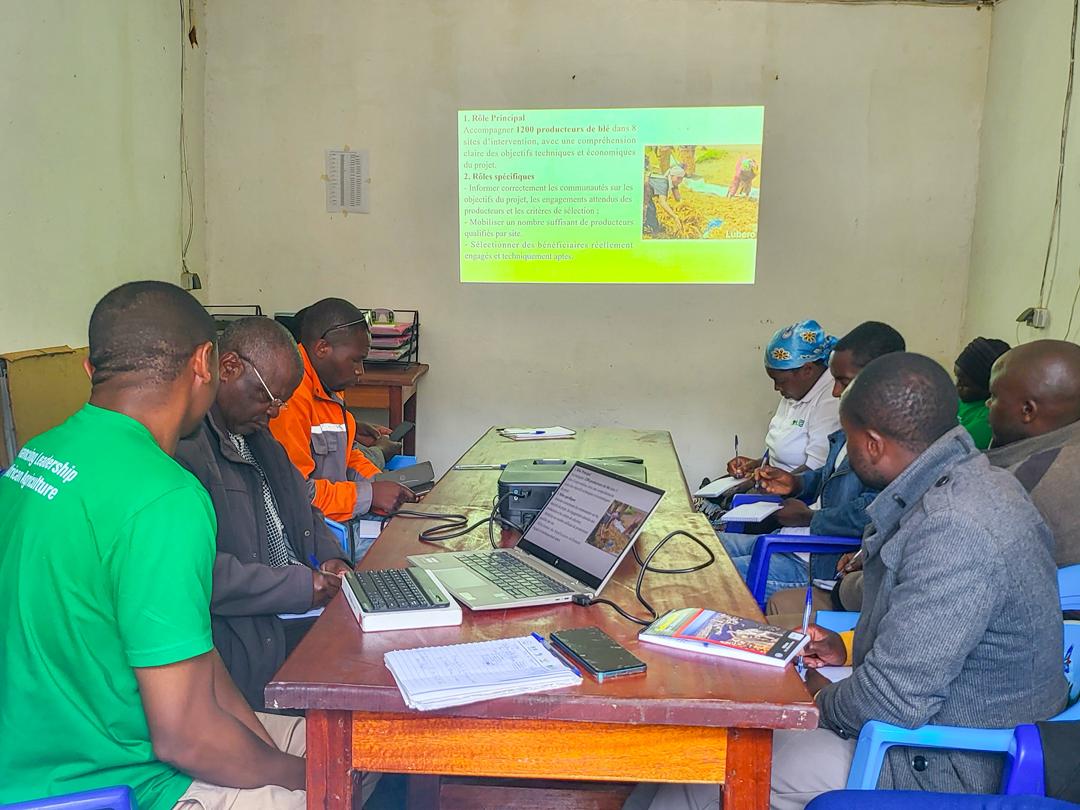
As part of ongoing efforts to revitalize wheat production in the Lubero Highlands of North Kivu, the African Agricultural Leadership Institute (AALI), in collaboration with the International Institute of Tropical Agriculture (IITA) and the Virunga Foundation, has completed a targeted training program for agricultural monitors. This initiative supports the long‑term revival of the wheat value chain and strengthens the technical capacity of local actors engaged in sustainable production practices.
The training brought together extension agents and community facilitators selected from surrounding villages, equipping them with practical skills in crop management, integrated soil fertility practices, good agricultural practices for wheat, and post‑harvest handling techniques. Participants also received instruction on the use of appropriate small‑scale mechanization tools, which are essential for improving efficiency and reducing losses for smallholder farmers.
This initiative complements the broader field activities currently underway in Lubero, where AALI and partners have been working to support farmers in adopting improved wheat varieties and modern production practices. Recent outreach efforts have demonstrated yield improvements and strong interest among producers to adopt innovations that enhance productivity and market potential.
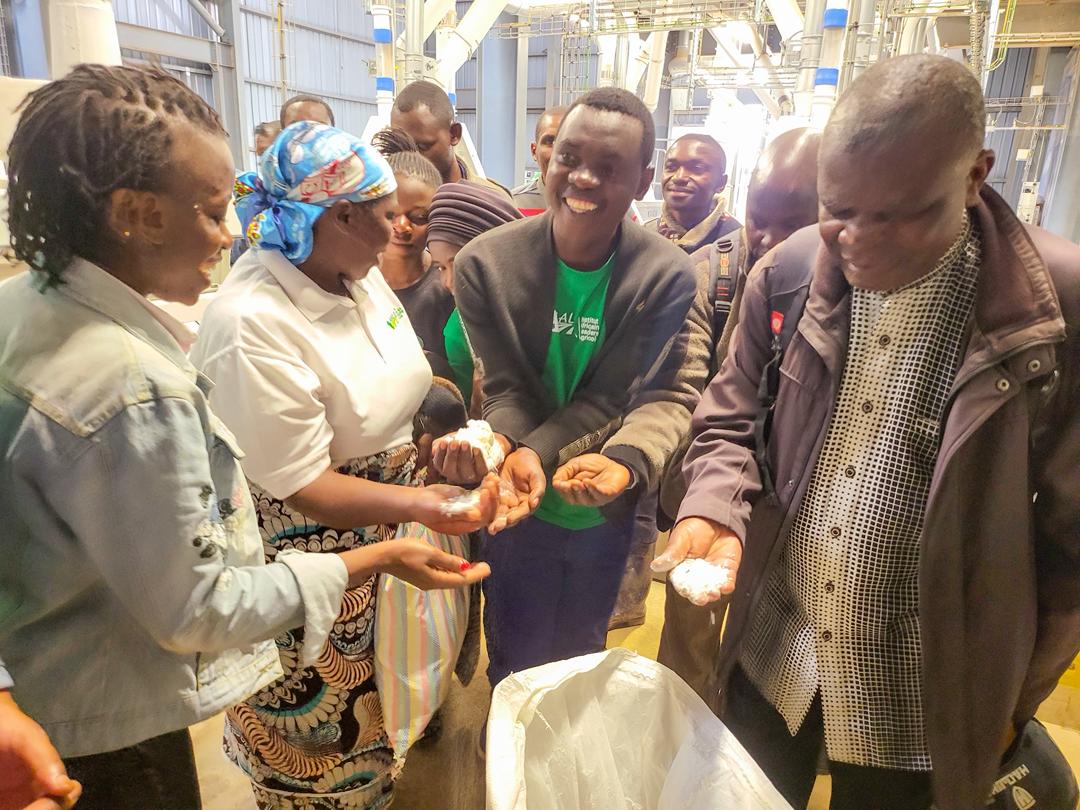
By training agricultural monitors, AALI aims to create a network of informed field agents who can guide farmers throughout the cropping season, foster the adoption of improved practices, and troubleshoot challenges on the ground. These monitors serve as a bridge between research‑driven recommendations and real‑world field application, ensuring that technical innovations are effectively disseminated and sustained at the community level.
Participants described the training as timely and impactful, emphasizing how strengthened technical capacity will enable them to better support farmers, improve crop quality, and increase wheat production in Lubero. Farmers and community leaders welcomed this initiative, noting that locally anchored expertise is essential for sustainable agricultural transformation and resilient food systems in the region.
This program aligns with AALI’s broader mission to empower local communities through skills development, inclusive agricultural innovation, and multi‑stakeholder collaboration. By building local capacity for agricultural extension and technical support, AALI and its partners continue to advance efforts toward a sustainable, productive, and resilient wheat value chain in North Kivu and contribute to food security and economic opportunities for rural households.